Rare Vivian Gordon Footage (1987)
09 Saturday Nov 2013
Posted in Uncategorized
09 Saturday Nov 2013
Posted in Uncategorized
02 Monday Sep 2013
Posted in Uncategorized
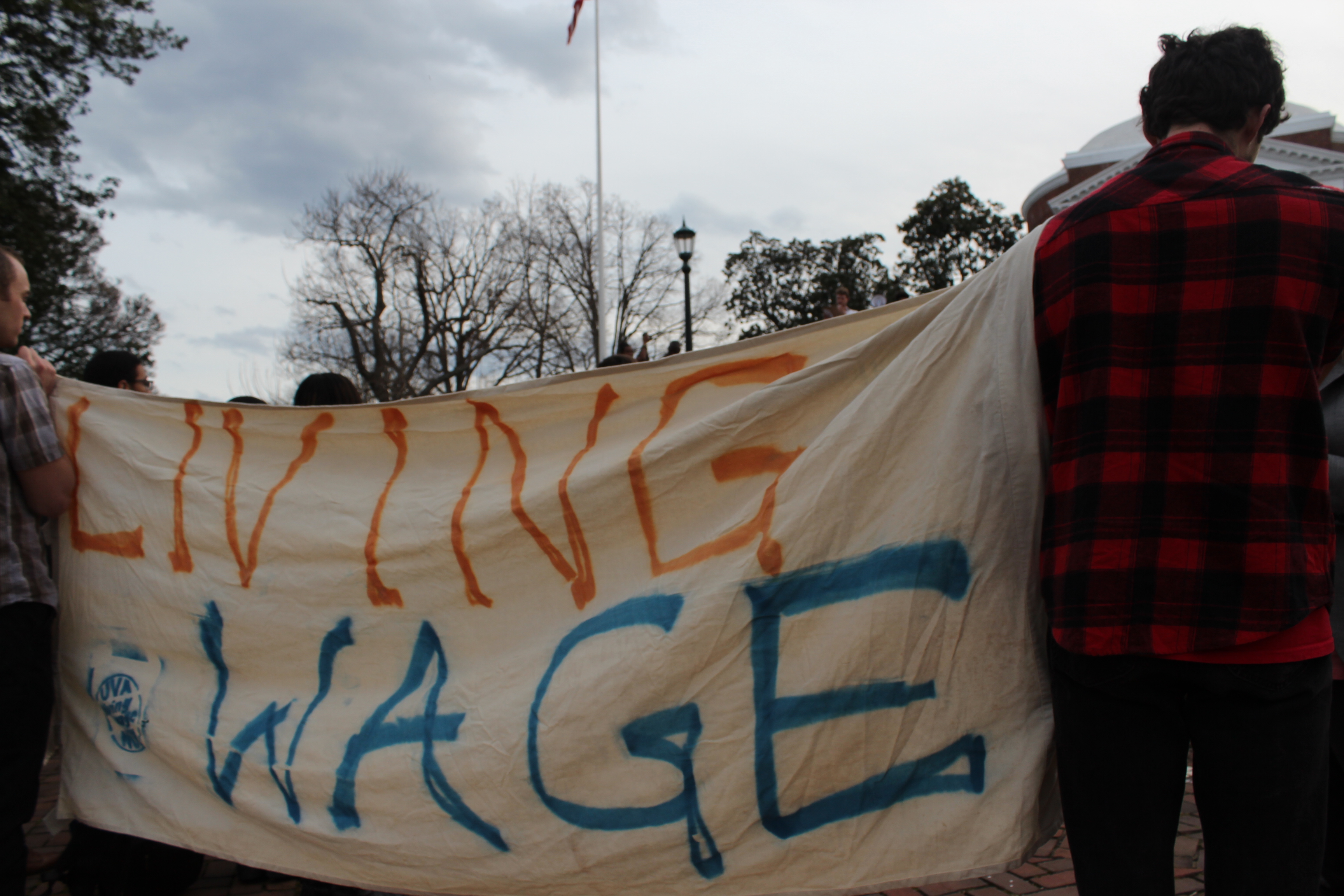
“Our long range objective is to create a society free of race, sex, class, and national oppression, founded on the humanitarian principle of from each according to his ability, to each according to his needs.” League of Revolutionary Black Workers, General Program, 1970
On a chilly November morning in 1969, thirty students from the University of Virginia eagerly journeyed to the nearby town of Wanyesboro to assist striking workers in their fierce battle with General Electric (GE) over wages and employee benefits. Counted among the student leaders distributing leaflets at the General Electric Components Plant was one of the University’s most outspoken activists, Thomas N. Gardner. Like several of his undergraduate peers, Gardner viewed the expansion of student activism into the labor arena as one of the most important developments of the late sixties. Across the South, in both rural and urban areas, black and white collegians participated in political protests that belied the myopic portrayal of student activists as divorced from the real struggles of working people. On the pages of UVA’s student newspaper, the Cavalier Daily, Gardner sought to alert readers to the geographical breadth and occupational diversity of existing partnerships between workers and students: “Students in Georgia worked in support of the wild-cat striking women in Blue Ridge,” he boasted. “…Students in Appalachia have worked with anti-strip mining committees and the Black Lung striking miners…students are active in the sanitation and hospital workers’ strikes in Memphis, Atlanta, and Charleston, and students all over the South have worked on behalf of the UFWOC’s boycott against all California table grapes with the full knowledge that the inclusion of farm workers could have important positive effects on the rural aspects of the Southern economy.” Of course, as many scholars and activists have noted, the personal and institutional ties that bound organized labor, the black freedom struggle, and the student wing of the New Left had a history that went much deeper than the 1960s.

Armstead Robinson, Leader of the Black Studies Movement at Yale and Founding Director of the Carter G. Woodson Institute for African American and African Studies at the University of Virginia
Still, many student activists of that decade, including Tom Gardner, sensed that the time was ripe for a more politically robust partnership between students and labor. In explaining one of the sources of his own optimism about the revolutionary possibilities of the moment, Gardner noted the growing-class consciousness among students at UVA. “For the past four years or more, students have been especially concerned with the plights of the University’s own employees. Living constantly in view of this situation has perhaps made us more aware and sympathetic to the problems of employment elsewhere. The University, with 4,400 non-academic employees is the main employee in Charlottesville, and with its starting salary of $3,168, is, thus one of the main perpetrators of poverty in Charlottesville.”
The idea of employment as a “key site in determining personal well being and communal power” echoed in the statements of student activists at UVA, as well as local civil rights activists. In fact, in 1963, the Charlottesville NAACP insisted that “the job a person has is basic to his position in society…it determines the nature and condition of his property; the health and education of his children, the moral environment of his family, and his individual self-respect.” [1]
Not lost upon the NAACP and many other civil rights and black power organizations was the inextricable link between political and economic justice.
So with that sentiment, the photographic theme for today’s post is black labor at the University of Virginia. These shots come primarily from the late 60s and early 70s, and they feature a broad spectrum of African American laboring women and men. Service and maintenance workers, security guards, administrators, and teachers…they all are here.
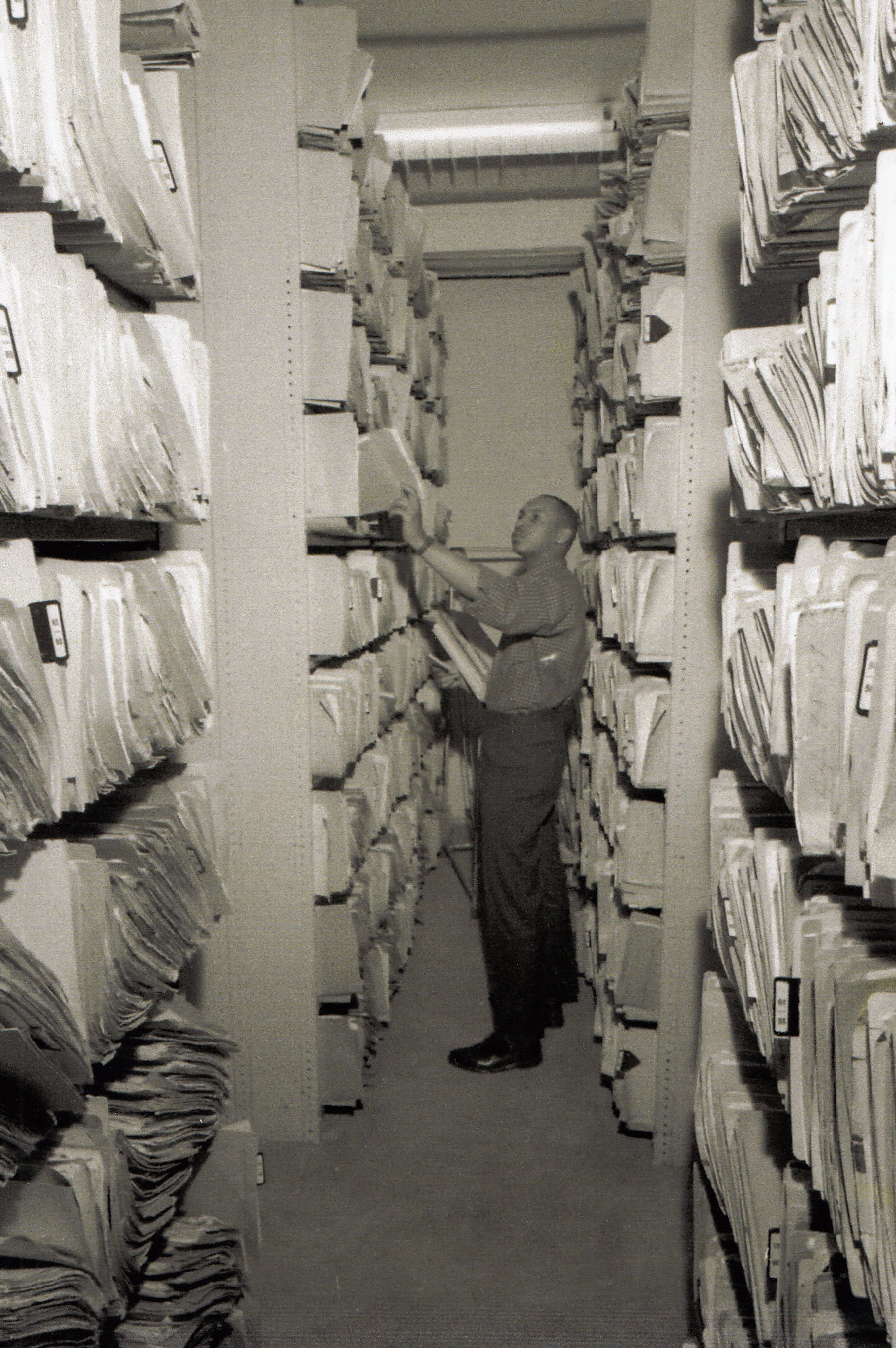
Medical Records, UVA Hospital, 1967
Of course, these workers and their quest for economic justice and full inclusion into the labor market are part of the activist struggles documented in our project, “Black Fire.”
If nothing else, this post serves as a reminder of both the beauty and dignity of working people as well as the multifaceted nature of the black freedom struggle at UVA. As one black faculty remarked in 1986:
“ A viable integration policy must involve more than the interests of undergraduate students. Such a policy must have as a conscious goal the full integration of the faculty and staff. Our students, white as well as black, ought to encounter black and white faculty and staff as part of the normal course of their interaction with this institution. UVA must also address the needs of its black employees who are in non-academic and non-managerial areas because they constitute the vast majority of blacks employed by the University. Because UVA is the largest employer in the Charlottesville area, it has both a special obligation and a special opportunity to contribute to the well-being of blacks in Charlottesville.”
No better time to reflect on that obligation than Labor Day!

UVA Hospital Workers, April 1970

Black Admissions Recruitment, June 17, 1971

Buildings and Grounds Staff, 1970

Buildings and Grounds Staff, 1970
[1] Nancy MacLean, Freedom Is Not Enough, 6.

